


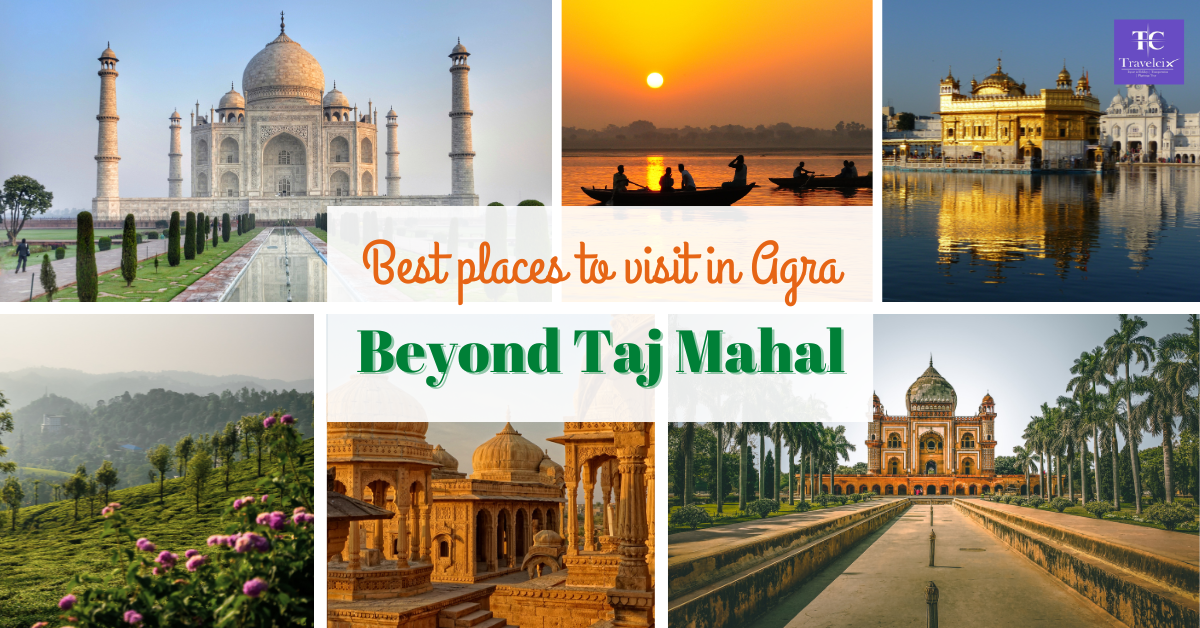
Best Places to Visit in Agra Beyond the Taj Mahal in 2026
Everyone who visits Agra comes for the Taj Mahal. And honestly — how could they not? It is one of the most breathtaking structures ever raised by human hands, a monument so perfectly proportioned that it looks unreal from every angle at every hour of the day.
But here is something that most travellers only discover after they actually arrive: Agra is so much more than its most famous monument.
I have lived in this city my entire life and guided thousands of visitors through its streets, forts, gardens, and food lanes for over eight years. And I can tell you with complete honesty — the people who leave Agra most satisfied are always the ones who stayed a little longer and looked a little further than the Taj Mahal’s east gate.
So whether you have two days, three days, or a full week, this is your complete guide to the best places to visit in Agra that most travellers never get to see.
The Taj Mahal — Still the Beginning, Not the End
We start here because we must. The Taj Mahal is not a tourist checkbox — it is a genuine masterpiece of human love and craftsmanship, and it deserves your full, unhurried attention.
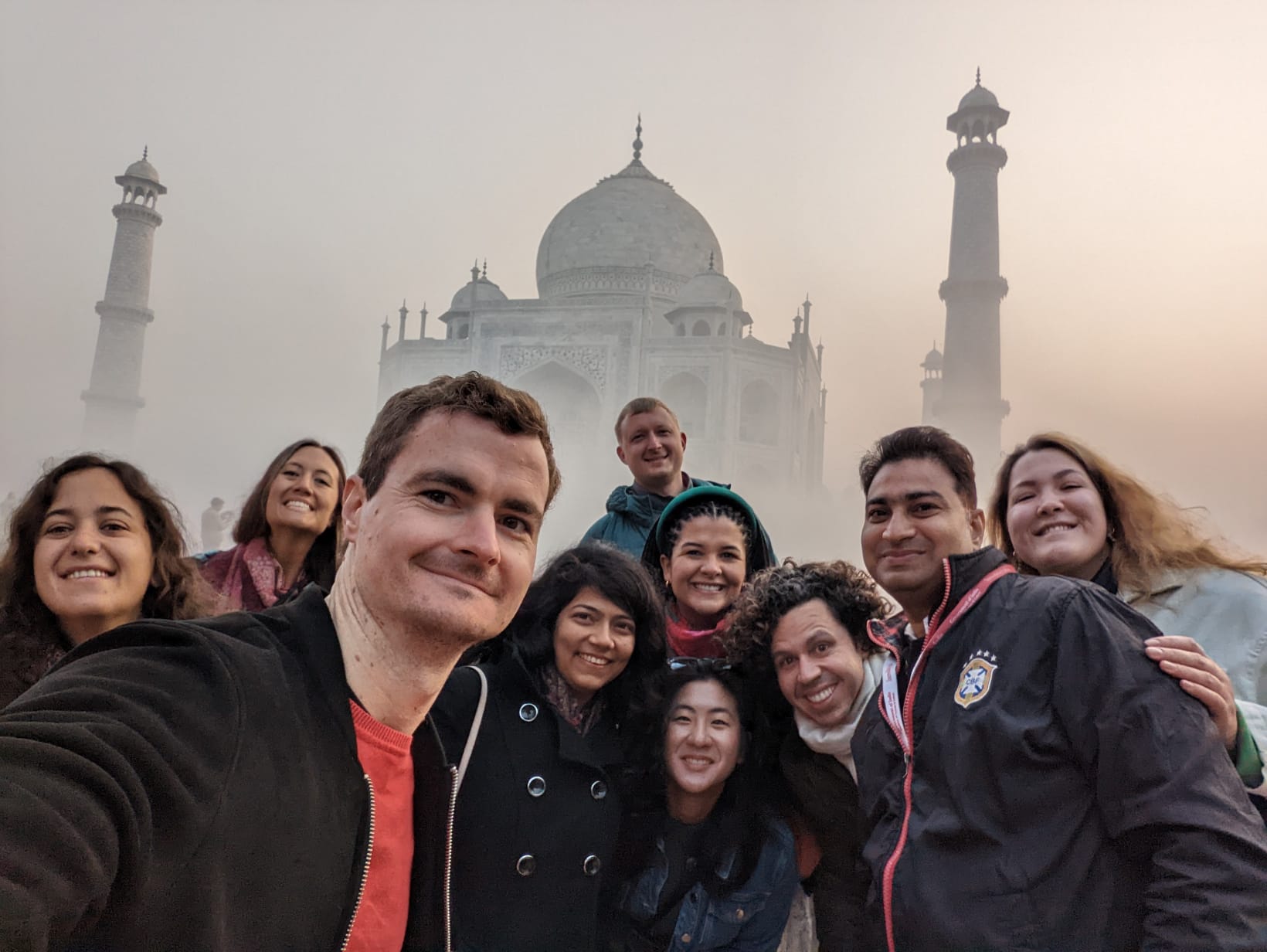
Built by Emperor Shah Jahan between 1631 and 1653 in memory of his beloved wife Mumtaz Mahal, the Taj Mahal took over twenty thousand artisans and twenty-two years to complete. The white marble changes colour throughout the day — blush pink at sunrise, bright white at noon, and a deep amber gold at sunset. If you are visiting, arrive at opening time for the sunrise experience. The crowds are smaller, the light is magical, and the silence around the monument in those early minutes feels almost sacred.
According to UNESCO’s World Heritage Records, the Taj Mahal complex covers 17 hectares and includes the main mausoleum, two flanking mosques, a grand gateway, and formal Mughal gardens — much of which most visitors walk straight past without a second glance.
👉 Book a Private Taj Mahal Sunrise Tour with a Licensed Guide
1. Agra Fort — Three Hours Minimum, No Exceptions
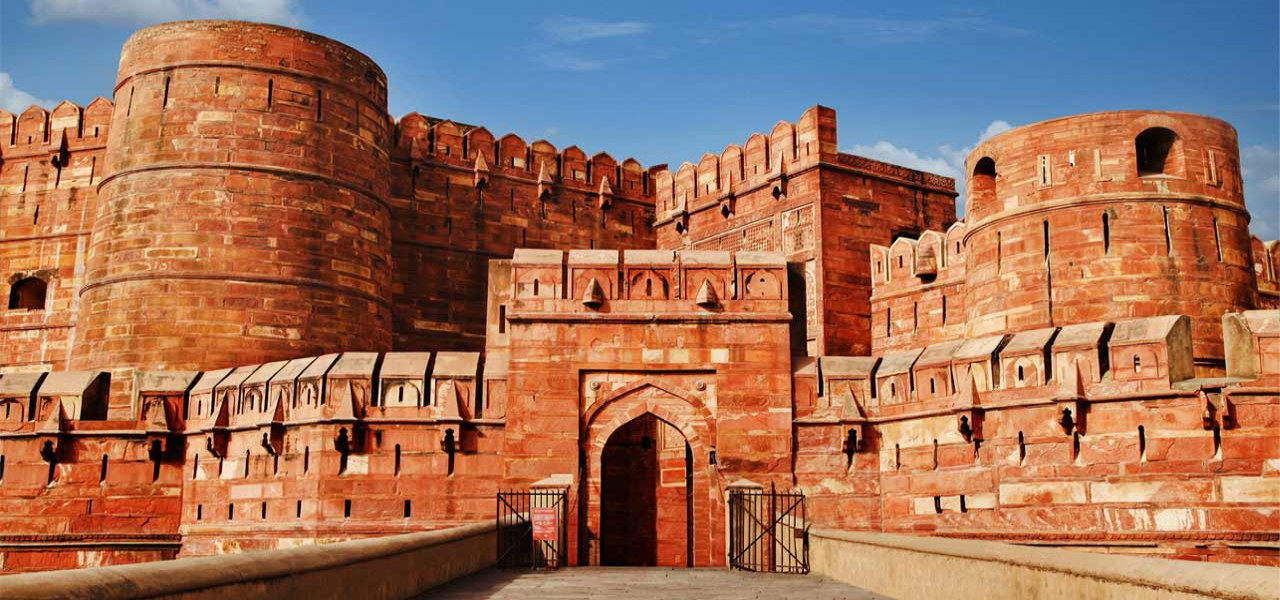
If the Taj Mahal is Agra’s soul, then Agra Fort is its skeleton — the structure upon which the entire history of the Mughal Empire was built. Most visitors give it ninety minutes between checking in and heading to dinner. That is, with great respect, a mistake.
Commissioned by Emperor Akbar in 1565 and expanded by both Jahangir and Shah Jahan over the following century, this enormous red sandstone fort stretches for nearly two and a half kilometres along the Yamuna River. It is a UNESCO World Heritage Site and one of the finest surviving examples of Mughal military and palace architecture anywhere in the world.
Inside the fort walls you will find the Diwan-i-Aam (the Hall of Public Audience, where the emperor received ordinary citizens), the breathtaking Diwan-i-Khas (the Hall of Private Audience, decorated in silver and gold), and the Musamman Burj — an octagonal marble tower with a perfect, unobstructed view of the Taj Mahal. This is the tower where Shah Jahan was kept under house arrest by his own son, Aurangzeb, in the final years of his life. He died here in 1666, gazing at the tomb he had built for his wife.
That story alone — told properly, in the right place, at the right time of day — is worth the entire trip to Agra.
According to the Archaeological Survey of India, Agra Fort once housed over five hundred buildings during its peak Mughal period, of which only a fraction survives today. What remains is still extraordinary.
Come early. Take your time. And come with someone who knows the stories.
2. Mehtab Bagh — The Best Sunset in All of Agra
On the northern bank of the Yamuna River, directly across from the Taj Mahal, lies a garden that the vast majority of tourists never bother visiting. That is entirely their loss — and quietly, your gain.
Mehtab Bagh — which translates beautifully as “Moonlight Garden” — was originally laid out by Emperor Babur in the sixteenth century as the final garden in Agra’s grand riverside sequence. It was deliberately positioned so that the Taj Mahal would be reflected in its large octagonal pool. The garden fell into disuse and was buried under silt for centuries before the Archaeological Survey of India restored it in the 1990s.
Today, it is one of the quietest and most beautiful spots in Agra. There are no aggressive souvenir hawkers. There are no queues. There is no noise — just the wide, slow river, a restored Mughal garden, and the Taj Mahal standing directly opposite you in full, unobstructed view.
Come at five in the evening. Watch the marble shift from white to gold to rose as the sun drops. If you have a camera, you will run out of superlatives.
This is also one of the best spots in Agra for photography tours — the perspective from Mehtab Bagh is one that most tourists in standard packages never see.
3. Itimad-ud-Daulah — The Monument That Invented the Taj Mahal
Before Shah Jahan built the Taj Mahal, a smaller but equally extraordinary building was constructed just two kilometres upstream along the Yamuna. Itimad-ud-Daulah — popularly nicknamed the “Baby Taj” — is the tomb of Mirza Ghiyas Beg, the father of Empress Nur Jahan, and it quietly changed the entire course of Mughal architecture.
This was the first Mughal monument built entirely of white marble rather than red sandstone. More significantly, it was the first to feature pietra dura — the painstaking art of inlaying semi-precious stones including lapis lazuli, jasper, onyx, and topaz into marble to form intricate floral and geometric patterns. Every technique you see in the Taj Mahal was essentially pioneered here first.
The building is far more intimate than the Taj Mahal, and considerably less crowded. Architecture enthusiasts and photographers tend to love it precisely for that reason — you can stand close to the walls, study the stonework in detail, and appreciate the craftsmanship without two hundred people standing between you and what you are looking at.
The Archaeological Survey of India classifies it as one of the finest examples of Mughal decorative architecture in the country. We would not argue with that.
👉 See All Agra Heritage Tours and Book a Private Guided Visit
4. Fatehpur Sikri — A Ghost Capital Frozen in Time
About forty kilometres southwest of Agra, down a straight highway through farmland and scattered villages, stands one of the most remarkable places in India — a perfectly preserved Mughal imperial capital that was built, occupied for fourteen years, and then simply walked away from.
Fatehpur Sikri was built by Emperor Akbar beginning in 1571 to honour the Sufi saint Sheikh Salim Chishti, whose blessings Akbar believed had granted him an heir. For fourteen years it served as the capital of the Mughal Empire. Then the water supply failed, the court relocated to Lahore, and the city was left exactly as it stood.
What remains today is astonishing. The Buland Darwaza — a gateway that rises fifty-four metres into the sky and remains one of the tallest gateways in the world — greets you as you enter. Inside the complex you will find the Panch Mahal, a five-storey open pavilion with no two columns alike; the Jodha Bai Palace, a sophisticated fusion of Hindu and Mughal architectural styles; and the Diwan-i-Khas, whose singular massive central column spreading into a platform of carved brackets is unlike anything else in Indian architecture.
The UNESCO World Heritage Committee included Fatehpur Sikri on its World Heritage List in 1986, recognising it as an outstanding example of Mughal architecture at its most inventive and confident.
This is best paired as a half-day excursion from Agra, combined with a morning at the Taj Mahal. It is one of those places that genuinely rewards a knowledgeable guide — the stories layered into every courtyard and doorway are extraordinary.
5. The Old City Food Lanes — Where Agra's True Flavour Lives
No guide to the best places to visit in Agra would be honest without devoting serious attention to its food. The city’s culinary culture runs deep — centuries of Mughal royal kitchens, spice trade routes, and street food traditions have created a food scene that genuinely has no equal in this part of India.
Start your morning with bedai and aloo sabzi — a crispy fried bread served with a spiced potato curry — at one of the old shops near Mankameshwar Temple. This breakfast has been served in Agra for generations, and eating it at a shared table on a busy street while the city wakes up around you is an experience in itself. Follow it with fresh jalebis, coiled and golden, dripping with sugar syrup and still warm from the oil.
For lunch, try Mughlai cuisine at one of Agra’s heritage restaurants — the mutton korma, the seekh kebabs, and the roomali roti are all dishes that carry the direct memory of royal kitchens. The flavour profiles here are richer and more complex than what you will find in Delhi, shaped by centuries of refinement.
Before you leave, buy petha — Agra’s most famous confection and one of the oldest sweets in India. Made from white pumpkin (ash gourd) cooked in sugar syrup until it becomes almost translucent, petha has been made in Agra for over three hundred years and comes in dozens of varieties. Panchi Petha near Agra Fort is the most authentic and respected shop for it.
The full Agra Food Tour on our website takes you through every one of these experiences with a local guide who knows exactly where to go.
6. Chambal River Safari — The Wildlife Experience Nobody Expects
One of the most genuinely surprising things about visiting Agra is discovering that one of India’s most pristine wildlife sanctuaries is less than an hour away. The National Chambal Sanctuary stretches across Uttar Pradesh, Madhya Pradesh, and Rajasthan, and the Chambal River that flows through it is one of the cleanest and least industrialised rivers left in the country.
A morning boat safari on the Chambal is an experience that stands in complete contrast to everything else Agra offers. There are no crowds, no entry queues, and no souvenir stalls. Instead, there is the river, the sound of birds, and the remarkable wildlife that depends on this ecosystem — the critically endangered gharial (a long-snouted crocodilian found almost nowhere else on Earth), the Gangetic river dolphin, the Indian skimmer, and over three hundred species of migratory and resident birds.
The Wildlife Institute of India has documented the Chambal as one of the last strongholds of the gharial in the world. Seeing one in the wild — basking on a sandbank in the early morning light while your boat drifts past — is one of those travel moments that stays with you permanently.
This is the off-beat Agra that almost no tourist pamphlet mentions. It is also, in our experience, the experience that surprises people the most.
Practical Tips Before You Go
Before you finalise your Agra itinerary, a few things worth knowing from someone who has navigated this city every day for eight years:
Best time to visit Agra is between October and March. The weather is pleasant, the skies are clear, and the golden winter light does extraordinary things to white marble. Avoid May and June — the heat is punishing and the haze reduces visibility significantly.
How many days do you need? A single day is enough for the Taj Mahal and Agra Fort if you are rushed, but two to three days lets you experience the full depth of what the city offers — including Mehtab Bagh at sunset, a morning at Itimad-ud-Daulah, a half-day at Fatehpur Sikri, and a proper food walk through the old city.
Getting around: The most comfortable option for sightseeing is a private air-conditioned taxi with a local driver and guide. This gives you full flexibility over timing and routing, which matters enormously when you are trying to catch the Taj Mahal at sunrise and Mehtab Bagh at sunset on the same day.
Explore Nearby Attractions in Agra Too
A lot of travelers come only for the Taj Mahal and leave too quickly. That is a mistake. Agra has several other places that add depth to your trip and help you understand the Mughal story better.
Best nearby places to visit:
– Agra Fort
– Mehtab Bagh
– Itimad-ud-Daulah (Baby Taj)
– Fatehpur Sikri
– local marble inlay workshops
Plan Your Transport in Advance
The last thing you want is transport confusion on the day of your visit. If you are coming from Delhi, Jaipur, or nearby cities, it helps to arrange your trip in advance.
Whether you need:
– Same-day Agra tour from Delhi
– Private car rental
– Local city sightseeing
– Taj Mahal sunrise visit
…it is always smoother when transport is already organized.
Conclusion
The Taj Mahal is the reason most people come to Agra. But in my experience, it is rarely the reason they remember Agra most fondly when they get home.
More often, it is the moment they watched the Taj Mahal turn gold from across the river at Mehtab Bagh. Or the morning they stood inside Fatehpur Sikri and felt the strange silence of an abandoned empire. Or the afternoon they ate petha on a street corner and talked to a local sweet-maker whose family has been doing the same thing for five generations.
Agra is a city with extraordinary depth. All it asks of you is a little more time and a little more curiosity.
If you are ready to see all of it — not just the postcard version — we would love to be your guides.
👉 Contact Us to Plan Your Personalised Agra Tour 👉 See All Our Tour Packages and Book Online
Book Your Taj Mahal Tour Guide Today
Need help planning your Agra trip? Visit our City Tour Guide, City Tour Packages, or Contact page to get started.
Ready to book? Visit agracitytourguide.in or WhatsApp us directly at +91-6395716554 to reserve your private tour with a licensed Agra guide
Frequently Asked Questions
- What is the best time to visit the Taj Mahal?
The best time to visit is early morning at sunrise, when the weather is cooler, and the crowd is lighter. - Is the Taj Mahal open every day?
No, the Taj Mahal is closed every Friday for general visitors. - Do I need a guide for the Taj Mahal?
It is not mandatory, but an approved local guide can make your experience much more meaningful and enjoyable. - Can I carry food inside the Taj Mahal?
No, eatables are generally not allowed inside according to official visitor rules. - Is photography allowed inside the Taj Mahal?
Photography is allowed in many outdoor areas, but not inside the main mausoleum
Recent Post
Quick Enquiry
Trending Tour


Book Now Pay On Arrival
✔ Price Guarantee No hidden charges
✔ Dedicated 24/7 Concierge Support
✔ Curated Private Tours & Experiences
Speak to a Travel Expert
📞 +91 63957 16554
✉️ agracitytourguide@gmail.com
Tags-
Agra Day Tour, Agra Full-Day Tour by Superfast Train, Tajmahal and Agra full-day tour by car from Delhi, Agra full-day tour by car from Delhi, Tajmahal Sunrise Tour, Book an approved tour guide in Agra, Book an approved tour guide for the Taj Mahal, Book an approved tour guide for Delhi, Agra, and Jaipur, India Travel Guide, India Travel Tips, Golden Triangle Tour, Tajmahal and Agra Fort Tour